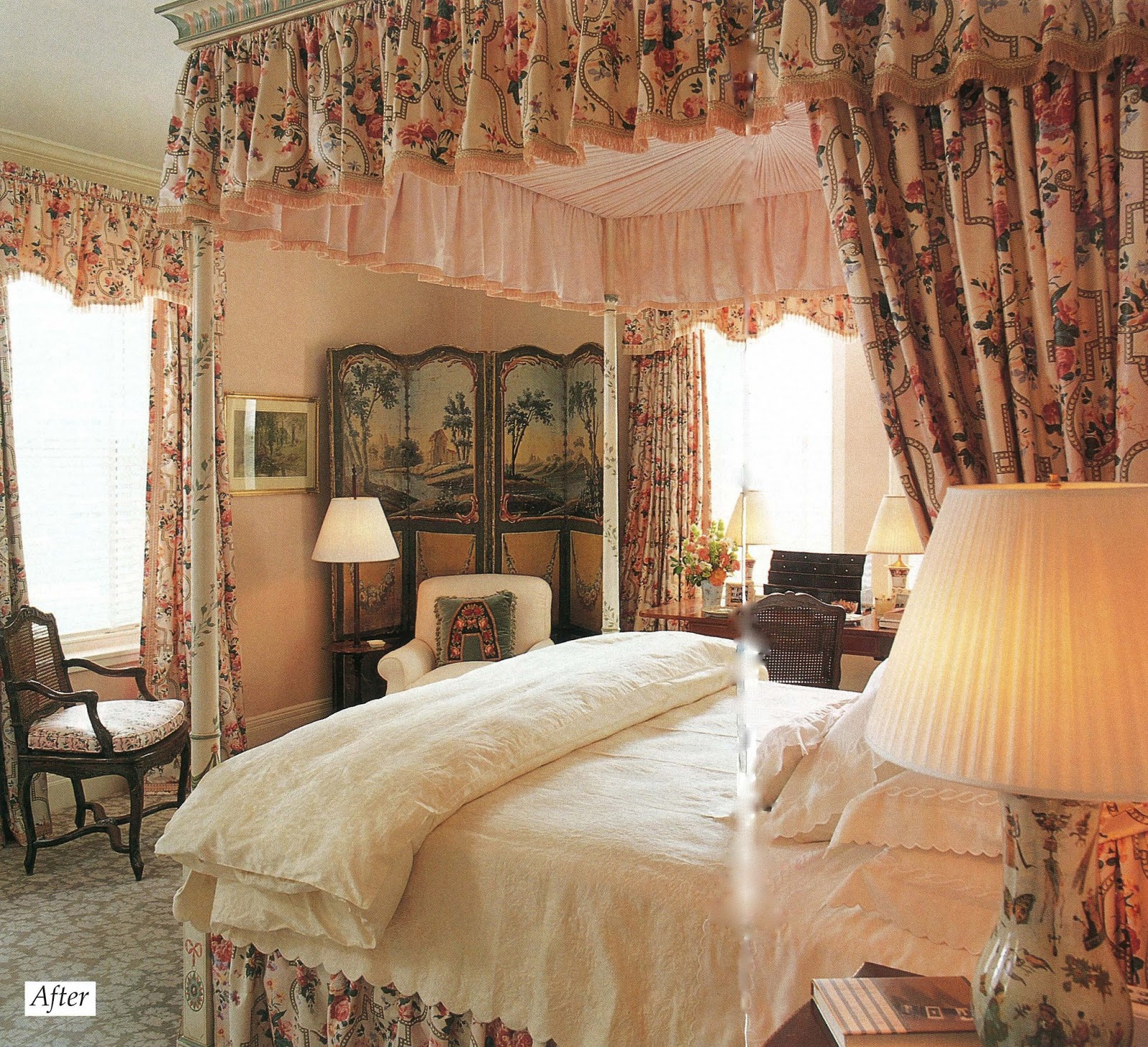
Showing posts with label Bunny Williams. Show all posts

Friday, October 16, 2015

Parish-Hadley Book Launch

60 East 93rd Street, New York City.
John Russell Pope, architect, completed 1931.
Photo: Collection of the Museum of the City of New York.
October 13, 2015, marked the launch reception for the new book PARISH-HADLEY TREE OF LIFE: AN INTIMATE HISTORY OF THE LEGENDARY DESIGN FIRM by Brian J. McCarthy and Bunny Williams.  The Devoted Classicist, John Tackett, a contributor, was an honored guest along with the thirty others who have a chapter in the book.  The reception was held in the glorious Manhattan townhouse that is home to the noted antiquarian Carlton Hobbs at 60 East 93rd Street.

No sign of commerce marks the entrance to Carlton Hobbs, LLC.
Photo by John J. Tackett for The Devoted Classicist blog.
That block between Madison and Park Avenue is one of my absolute favorites, the site of several of the city's most distinctive townhouses.  Number 60 was designed by architect John Russell Pope and completed in 1931 for Virginia Fair Vanderbilt.  Heir to the fortune her father made from the Comstock Lode and Big Bonanza mine, she was married to William Kissam Vanderbilt, president of the New York Central Railroad, until 1927.  Despite the financial reverses of many during the Great Depression, there were no economic hardships for "Birdie," as her friends called her, who divided her time between this house, another on Long Island, and a third in California. 

The main block of 60 East 93rd Street has three principal floors
with the set-back entrance not seen here.
Photo by John J. Tackett for The Devoted Classicist blog.
The house replaced three rowhouses and was built of limestone.  There are three principal floors but the service areas are on seven stories of shorter ceiling heights within that space.  Originally, there were four 18th century paneled rooms (one was removed by a subsequent owner) with antique parquet floors (replaced after occupation by a school).  Decorative hardware in the antique style was made by Bricard in Paris.

The Dining Room as set up as display space for
antiques offered for sale.
Photo by John J. Tackett for The Devoted Classicist blog.
After Virginia Fair Vanderbilt's death at age 60, the house was bought Bryan and Thelma Foy, she being the very stylish and rich daughter of auto manufacturer Walter Chrysler.  Then the house was occupied by the Romanian Mission to the United Nations before being bought by the Lycee Francais.  Carlton Hobbs bought the 50 room mansion for about $10.5 million in 2002 and spent two years in restoration.  Read more about the house in a past post of Daytonian in Manhattan.

Designers Brian J. McCarthy and Bunny Williams, authors of
PARISH-HADLEY TREE OF LIFE: AN INTIMATE HISTORY OF THE LEGENDARY DESIGN FIRM
address the guests from the staircase at the book launch reception.
Photo by John J. Tackett for The Devoted Classicist blog.
In addition to seeing the interior of the house, it was a great treat to see some of my old friends and colleagues and meet new ones.  In addition to Brian and Bunny, who were there with their respective spouses Danny Sager and John Rosselli, there was Thomas Jayne, Michael Whaley (and wife K.T.), David Kleinberg, Nicholas Miles PentecostLibby Cameron, Kim Cruise, Nancy Porter, Carol Cavaluzzo, John MurrayDavid McMahon, and Paul Engel.  And it was so good to see Mark Ferguson with business partner Oscar Shamamian with their wives Natalie Jacobs and Llewellyn Sinkler.  Parish-Hadley "alumni" after my tenure included Douglas C. WrightTodd Klein, James Andrew, and Thom Filicia.

A view from the staircase of some of those gathered for the book launch reception.
Photo by John J. Tackett for The Devoted Classicist blog.
It was a great pleasure to see Peter van Hattum the spouse of the late Harold Simmons, my former "boss" who was such a great teacher.  And also attending was former employee from the early days of Parish-Hadley, Suzanne Earls Carr.  Sue introduced me to her guest, Bruce Budd, the esteemed designer who had worked for the late tastemaker Bunny Mellon; what a treat to meet such a talented gentleman!  Also in attendance was former Parish-Hadley client and great friend of Albert Hadley Rene Meyers who is practically part of the alumni group. One of my favorite decorative painters, Chuck Fischer, was there; he also has authored some fantastic pop-up books with his illustrations literally springing to life throughout the book.  And I spoke briefly to author of several books on famous decorators Stephen Salny.  Of course, there were many, many others and I am sure I am leaving someone out.  But it was fun and a good time was had by all.  Thanks to our host Carlton Hobbs and literary marketing & branding agent Jill Cohen with associate Lizzy Hyland.

Tuesday, October 6, 2015

John Tackett is a Branch of the Parish-Hadley Tree of Life

John Tackett's design for a Garden Room in a renovation of a 1930s
house in the Volk Estates area of University Park, Dallas, Texas.
Image: John Tackett Design and The Devoted Classicist blog.
I have known all about Brooke Astor's Money Room, a famous space now revered by traditional decorators and architects, for 35 years.  Blessed with the classic proportions of a top Pre-War Park Avenue apartment building and given more than just a bit of help by knowing what to play up and what to play down, the expertly edited room was a great influence on this impressionable twenty-something.  But by the time of my tenure, however, it existed only in this one transparent image below, part of a slideshow presented to Parish-Hadley clients on occasion to illustrate a point.
Brooke Astor's "Money Room" decorated by Parish-Hadley in the 1970s.
Photo: ALBERT HADLEY: THE STORY OF AMERICA'S PREEIMINENT INTERIOR DESIGNER
Mrs. Astor had given the name to a room in her apartment where she determined the beneficiaries of cash gifts from the Astor Foundation charities as well as from her own fortune provided by her late husband, Vincent Astor (son of RMS Titanic victim Jacob Astor).  The room was on the lower level, originally a separate full-floor apartment and later joined to her own with the insertion of an interior staircase.  Brooke Astor was about to leave on a trip the next day when she told Albert Hadley that he could redecorate the Drawing Room of her mother's former apartment if the work could be completed by the time of her return in only two weeks.  The whole Parish-Hadley office immediately sprang into action the next day along with their team of tradespeople and workrooms. 

The Dining Room of a new house designed by John Tackett
for a vacant waterfront site in Palm Beach, Florida.
The chairs are the "Jack" model by Bunny Williams Home.
Drawing by John J. Tackett.
The room was emptied and the furniture sent out for re-upholstery.  The walls were painted with a subtle yellow marble finish but the most memorable feature was the floor; the herringbone parquet floor was scraped and stained in two tones of varying zig-zag stripes, an innovation at the time.  An often over-looked feature of the room was the curtains hanging from big gilded rings on wood poles.  The curtain fabric, and the whole point of telling the story here, was a custom pattern that Mr. Hadley had just designed.  It was printed with a large scale, "Tree of Life" motif that resembled stylized embroidery in brown on natural linen.  The whole team labored diligently with designers Kevin McNamara, Bunny Williams, and Harold Simmons working late on the Sunday night arranging books and hanging pictures before Mrs. Astor's return the next day.  The room was a huge success but virtually unknown to the rest of the decorating world outside Parish-Hadley until it was published in 2005.

John Tackett's design for a new house on a secluded, wooded, hilltop site
in Nashville, Tennessee, is organized so all room benefit from the views.
Drawing by John J. Tackett.
This and many other stories about the company are told by thirty-one former employees in the new book released today, October 6, 2015, PARISH-HADLEY TREE OF LIFE; AN INTIMATE HISTORY OF THE LEGENDARY DESIGN FIRM.  As those who worked there earned the equivalent of an advanced degree in design, they are known as "alumni."  In an unusually high number of instances, the "graduates" went on to found their own firms.  Examples of their work, influenced by their Parish-Hadley education, illustrate the book.

John Tackett's design for a new house in Nashville features a service entrance elevation
that is pleasing to the owner who almost always uses this entrance as well.
Drawing by John J. Tackett.
Brian J. McCarthy had the idea for the book which had Albert Hadley's blessing before his death in 2012.  (Sister Parish died in 1994).  Bunny Williams volunteered her help in making the book a reality and they are listed as co-authors.  But co-editors would be more accurate as each chapter is told in the words of an alum.  In addition to chapters by Brian and Bunny, other well-known designers such as David Easton, William Hodgins, David Kleinberg, Michael Whaley, and Thomas Jayne relate their experiences at Parish-Hadley.  Plus there are others -- no less talented -- such as John Tackett, known to you all as The Devoted Classicist.
John Tackett's design for a new house in Miami Beach features a
circular Entrance Hall decorated with a Neo-Regency palm tree motif.
Drawing by John J. Tackett.
Not wanting to spoil the experience for those who will read the book, the decision was made not to reproduce any of the images from the book for this post.  As might be imagined, the book could have been published as several volumes but was eventually reduced to a usable 288 pages.  So here are a few of the John Tackett Design images that had to be cut from the final product. 
John Tackett's design for a new house on a minimal lot in Dallas was part of
a development of other homes of similar size and materials while otherwise being unique.
Drawing by John J. Tackett
PARISH-HADLEY TREE OF LIFE: AN INTIMATE HISTORY OF THE LEGENDARY DESIGN FIRM can be ordered at a discount from The Devoted Classicist Library, an affiliate of Amazon.  And if you do not have the 1995 book PARISH-HADLEY: SIXTY YEARS OF AMERICAN DESIGN or the 2005 book ALBERT HADLEY: THE STORY OF AMERICA'S PREEMINENT INTERIOR DESIGNER, these can be ordered by clicking on the title.   For additional features of The Devoted Classicist blog, see the regular on-line/web version here.   See more examples of my work by going to LABELS on the web version and clicking on "John Tackett Design Portfolio."   Also, see the photos on the Facebook page of John Tackett Design.


John Tackett's design for a new house in the style of a Creole cottage.
Drawing by John J. Tackett.

Thursday, June 11, 2015

Parish-Hadley Tree of Life

PARISH-HADLEY TREE OF LIFE
is a new book to be published October, 2015.
 
There is a new book in the works, PARISH-HADLEY TREE OF LIFE: AN INTIMATE HISTORY OF THE LEGENDARY DESIGN FIRM, being developed by Brian J. McCarthy and Bunny Williams that will focus not only on the firm, but will also feature thirty-one of the former employees who have gone on to successful careers on their own.  Because of the unique learning environment created by Sister Parish and Albert Hadley, the "graduates" of Parish-Hadley are known in the design profession as "alumnae" with their experience compared to an advance degree in design.  Each of the 31 alumni interviewed have a chapter in the book giving a personal reflection of the firm with illustrations of their work past and present.

The Parish-Hadley story is an very unique one; no other interior design firm - ever- has produced so many designers who left to establish their own studio.  Brian had the idea for the book about eight years ago.  He developed an outline and discussed it with Mr. Hadley (who passed in 2012 following Mrs. Parish's death in 1994) who was very excited about the project.  But Brian's own book, LUMINOUS INTERIORS: THE HOUSES OF BRIAN McCARTHY, came first.  When Brian told Bunny about his idea when they were both at the Nashville Garden & Antiques Show, she was very enthusiastic and promised her full support.  The next week, Bunny was in a meeting at Abrams and happened to mention the idea; the publishers jumped on it, giving the book an immediate green light for Stewart, Tabori and Chang, using the same book agent Jill Cohen, art director Doug Turshen and creative team that both Bunny and Brian had used before on their own books. In addition to the very readable text, the book also promises to be visually interesting.  Advances in digital imagery will avoid the muddy results of historic black & white photos that have plagued design books in the past.  Plus there are many new color never-before-published images.

The image used for the book jacket (and that may change) is one of my favorites of the Parish-Hadley projects, the Living Room of Nancy Pyne in Peapack, New Jersey.  Both partners had a hand in the design and the result is quintessential Parish-Hadley -- comfortable yet refined and with an architectural sensibility in the furnishings without being too rigid.

The title of the book expresses Albert Hadley's appreciation of the traditional motif, the Tree of Life.  The mythology of the sacred tree dates back to a number of ancient civilizations including the cultures of pre-Islamic Persia and ancient Egypt as well as other Asian, European, and Native American beliefs.  The motif gained wide-spread exposure as a popular design on 17th century printed cotton bedcoverings from India, the palampores which often featured a Tree of Life as a central figure.  The Tree of Life motif was also developed in Persia and China in the 18th century with adaptations for the European market where various goods were marketed.  Crewel embroidery was also used to represent the motif in England, often a natural color wool yarn on a colored background;  a wallpaper representation of this was an Albert Hadley favorite.

And not insignificantly, there will be a short chapter on John J. Tackett that Devoted Readers will not want to miss.  Plans are for an October 13, 2015, release with Hearst Publications -- Elle Décor, Veranda, and House Beautiful -- hosting a gala launch on that date.  So there will be plenty more about the book in the magazines in the coming months.  But for those who cannot wait to see the book on store shelves, pre-ordering at a discount price is available here.

Friday, April 10, 2015

Mario Buatta, Curtain Master

Curtains in the Dillon Room of Blair House
decorated by Mario Buatta. 1988.
Photo from Southern Accents.
Granted, there are many other examples that would better prove Mario Buatta's skill in curtain design, but this one illustrates several valuable lessons.  While it is admirable that the form of the curtains acknowledges the form of the window (or doorway), it is not critical that the form be absolutely followed.  Windows with a rounded head do not necessarily require rounded head curtains.  (As with any rule, there are exceptions and I will contradict myself in a future post, but let's stay with this for the moment).


The Dillon Room at Blair House
as decorated by Mario Buatta, 1988.
Photo from Southern Accents.
Identifying the gilded, pierced element of the valance (or pelmet) as the curtain cornice, note how that feature gives grace to the large opening.  The curtain cornice allows the striped silk taffeta fabric of the valance and panels to just simply hang; the volume of the fabric along with lining and interlining as well as the correct dimensions keep the ensemble from looking limp.  Although the center of the curtain cornice rises to a height above the cornice (or crown molding) of the room, note that the attachment of this treatment is made to the wall.  Curtains should never be attached to the face of the cornice of the room.  (And that is one rule for which I can think of no exceptions).

Another view of the Dillon Room, Blair House.
Photo from Architectural Digest.
While many might know that Blair House is the official guest house of the President for visiting foreign dignitaries and their entourages, some may not realize that it is actually four houses; two face Pennsylvania Avenue and two face Jackson Square adding up to over 100 rooms.  The 1984 to 1988 renovation dealt with architects John Mesick and John Waite restructuring the interconnection of the interior spaces and other functional issues with an $8.6 million grant from Congress.  But an additional $5 million was raised by private donations for the décor by the Blair House Restoration Fund headed by Selwa "Lucky" Roosevelt (Chief of Protocol from 1982 to 1989 and wife of Theodore Roosevelt's grandson) and Clement Conger (who was the force behind the White House decoration of public rooms from Pat Nixon until Nancy Reagan).  Half of those funds was used for decoration and half was reserved for an on-going acquisition and maintenance fund.  The responsibilities for the interior design were divided between Mario Buatta and Mark Hampton, each among the top "name' decorators of the time.

The Queen's Bedroom at Blair House
as decorated by Mario Buatta in 1988.
Bunny Williams redecorated the room in 2011.
Photo via The Washington Post.
In 2011, Bunny Williams, one of the top talents today, was brought in to redecorate three bedrooms, two by Mario Buatta and one by Mark Hampton, which had discontinued fabrics that made it not feasible to reproduce the original scheme. The curtains, however, were still in a condition suitable for re-use and sent to be auctioned in September, 2011 by the Potomac Company in Alexandria with proceeds to benefit the restoration fund.  The  headboards and associated hangings along with the curtains, all in a discontinued Lee Jofa chintz, were given a pre-auction estimate of $400 to $800; the results are not known.

Wednesday, January 21, 2015

Crème de la Crème

'Bunny Williams Silver Wire Cachepot'
Bunny Williams, the reining queen of lady decorators, hardly needs an endorsement from The Devoted Classicist for her extensive range of retail home furnishings.  But her new moderately-priced table top collection for Ballard Designs is especially noteworthy.  One stand-out for me, as a (self-proclaimed) ice cream connoisseur, is the cachepot designed to hold a pint container of the frozen treat.  Brass with a pewter-color finish and a removable stainless steel liner, who doesn't need at least one?  In my ideal world, they would be considered individual containers, but I will leave the necessary quantity for a gracious table to be determined by the host/hostess.  And yes, they can be used, instead, to hold flowers or greenery at other times.

Tuesday, March 4, 2014

One Man's Folly

The driveway to the estate of Mr. Fulow Gatewood
is lined with pots of hydrangeas.
Photo by Max Kim-Bee via Veranda.
Three great Southerners, each a much-admired acquaintance of The Devoted Classicist, have come together to produce a new book, ONE MAN'S FOLLY: THE EXCEPTIONAL HOUSES OF FURLOW GATEWOOD by Julia Reed (whose home was featured in a previous post here).  Furlow Gatewood, 92, has been an associate in the wildly successful to-the-trade source John Rosselli Antiques for more than 40 years.  Bunny Williams, my friend of over 32 years since our days at Parish-Hadley, wrote the Foreward to the new book.


Phillip, and Italian greyhound, sits in the entrance hall
of one of the guest houses known as Peacock House,
before a 17th-century Italian table below a
19th-century Dutch chandelier.
Photo by Max Kim-Bee via Veranda.

It was Rosselli's wife, the reining queen of decorators, Bunny Williams, who convinced Mr. Gatewood to do the book, according to the article in the March-April 2014 issue of Veranda.  "Gatewood never went to architecture school, but he creates these buildings with fabulous style because he has this innate feeling for architecture," Bunny is quoted to say.  "Then he furnishes them in the most delightful, eclectic way.  He has a real flair that often eludes professionals."

Another view of the entrance hall
at Peacock House.
Photo by Max Kim-Bee via Veranda.

The property near Americus, Georgia, consists of eleven acres with five houses and numerous outbuildings.  Peacock House, featured in the current issue of the magazine, originally began as a dirt floor greenhouse before becoming home for 40 peacocks.

Flush boards face the walls of the living room in Peacock House.
Photo by Max Kim-Bee via Veranda.

Now, with a few rooms added, it is a guest house, although no one has ever slept there overnight, according to the article written by Mimi Reed and produced by Carolyn Englefield.


A bed from John Rosselli fills an alcove at Peacock House.
Photo by Max Kim-Bee via Veranda.


Furnishings from John Rosselli decorate a guest room
at Peacock House.
Photo by Max Kim-Bee via Veranda.

A guest bath at Peacock House.
Photo by Max Kim-Bee via Veranda.


Architectural salvage played an inspirational factor in the design.  Fretwork from the noted West Cornwall, Connecticut antiques dealer Michael Trapp led to the creation of an elegant open garden room.  Porch posts from the Atlanta flea market, Scott Antique Market, set the theme of the gothic gingerbread exterior.

A porch with salvaged fretwork
becomes an outdoor garden room
with furnishings from John Rosselli and Treillage.
Photo by Max Kim-Bee via Veranda.
Architectural salvage was effectively used to give
character to a storage building near Peacock House.
Photo by Max Kim-Bee via Veranda.
 
An earlier article featuring different aspects of the property can be seen on the Veranda website here.
The Devoted Classicist Library
ONE MAN'S FOLLY:
THE EXCEPTIONAL HOUSES
OF FURLOW GATEWOOD
 
The new book, to be released by Rizzoli on April 8, 2014, may be ordered now at a discount at The Devoted Classicist Library here.

Thursday, October 24, 2013

Deja Vu All Over Again

One of the most talked about features of Architectural Digest magazine is their annual "Before & After" issue.  Some of the articles in these past issues have been real "eye-rollers" with the only difference, it would seem, in the photos being that one photo was taken before furniture -- perhaps with a large cardboard box and a ladder as props -- and the other photo taken after the furniture had been installed.  Other projects were truly interesting transformations, however, showing great design insight and inspirational style.

In the November, 2013 issue, Mitchell Owens takes a look back at ten of the best in the article "Second Chances."  (Click the title for the on-line version of the article).  While it is no secret that I praise Mitch as one of today's best design writers, when I saw that title I thought to myself that he would be crazy if he had overlooked my architectural project decorated by Bunny Williams that had appeared in the February, 1994, issue.  (If you do not recall it being featured on The Devoted Classicist blog last May, take a look here).  Well, Mitch had not lost his senses, of course, and did indeed choose the Park Avenue apartment renovation for his article.  (I know he does not write the captions, so I will forgive omitting my name which was included in the original article).  The Entrance Hall image with those incredible painted panels commissioned especially for the space and the restored terrazzo floor is one that has received so much praise over the years that I appreciate it, of course.  But it was the exceptionally large Dining Room that really had the biggest transformation into a Library that was the show-stopper for visitors to the apartment.  (Since the clients only used the apartment as a pied-a-terre and always went out for dinner when in Manhattan, there was no need for a formal Dining Room).  In any case, it was a real treat to see these pictures in print again.  Many of my clients read Architectural Digest, so I appreciate having my work included.


Before photo by Glenn Keyes Architects.
After photo by Steven Brooke.
All photos are from the Conde Nast Archive.
Another project included in the article was the restoration of an 1803 plantation house on Kiawah Island, South Carolina, by my friend and former architecture school classmate, Glenn Keyes.  In a team associated with architect Chris Schmitt, the piazza was reconstructed and modern conveniences were provided in additions that allowed the existing rooms to be restored to their original form.

Take a look at this and other Architectural Digest articles and blog posts by Mitchell Owens here.

Friday, May 17, 2013

480 Park Avenue: Before and After

The Entrance Hall of an apartment at
480 Park Avenue, New York City,
after improvements by John Tackett Design
and furnishings by Bunny Williams.
During my tenure at Parish-Hadley during the 1980s, there were many dozens of projects decorated by Bunny Williams where we worked as a team and I supplied the architectural services.  Such was the case for this project after we had each gone out on our own.

The old padding of the wall-to-wall carpet
that had previously covered the terrazzo
floor in the Entrance Hall.
Photo:  Billy Cunningham for Architectural Digest.
John Tackett Design has the greatest appreciation for interior designers who understand and value good architecture, and there is no one today that excels in that category more than Bunny Williams.  She understands that a total package of good design requires more in her profession than just selling things.

The Living Room 'Before' improvements
at 480 Park Avenue, New York City.
Photo:  Billy Cunningham for Architectural Digest.
There was a construction boom in Manhattan during the second half of the 1920s with high-rise residential buildings making up the bulk of the activity.  Since profits could be higher in luxury construction, real estate investors sank their money into apartments and apartment-hotels that contributed to the trend that turned Manhattan into an enclave for the rich.  Park Avenue, with the railroad tracks sunk out of sight, became a prime area for these apartment buildings as new technology allowed relief from the vibration of the trains.

The Living Room 'After' renovation by
John Tackett Design
and furnishing by Bunny Williams.
Photo:  Billy Cunningham for Architectural Digest.
Real estate developer Sam Minskoff had completed several projects with Emery Roth before commissioning him to design the luxury building at 480 Park Avenue.  Constructed 1928 to 1929 with an exterior skin of buff brick and limestone with cast terra-cotta ornament, the building is a prime example of the Renaissance Revival style so popular at the time.  The upper floors step back to allow light and air in addition to creating opportunities for terraces high above Park Avenue as well as East 58th Street.  Wood-burning fireplaces and relatively high ceilings were also featured.  The water tower is concealed in the form of a small but picturesque palazzo.  Although the larger apartments contain rooms for live-in staff, maid and butler services were originally available to all tenants, and meals could be taken in an elegant restaurant for the tenants.

Architect's rendering of 480 Park Avenue.
Image from MANSIONS IN THE CLOUDS.
480 Park Avenue is a nineteen-story building with original apartment sizes ranging from three to thirteen rooms in both simplex and duplex plans.  Lucrative rental income from the ground floor and first floor allow relatively low maintenance rates for the apartments, now a co-operative building.

Another view of the Living Room 'After' improvements
by John Tackett Design
and furnishings by Bunny Williams.
Photo:  Billy Cunningham for Architectural Digest.
For a Florida-based couple with two young daughters, the apartment at the southeast corner with two terraces, three bedrooms, and two maid's rooms that could be combined to create a guest room fit the bill.  But little had changed in terms of decoration in more than thirty years.

The original Dining Room was the largest room
in the apartment, but it was featureless
other than a pair of French doors to a small terrace.
Photo:  Billy Cunningham for Architectural Digest.
Limited investigation by the owners before purchase revealed wood floors in bad shape under the old wall-to-wall carpet.  The Entrance Hall and Foyer (not shown in these photographs) had not been checked, however, and imagine the surprise when I pulled back a corner to reveal the terrazzo floor inlaid with a classic design with brass strips.  There was some damage around the perimeter where the "tackless" strips had been nailed into the floor, but that was repaired by a craftsman brought out of retirement by the general contractor for the project, Ron Metell

A bookcase cabinet that holds a TV
was added to the original dining room along
with pine paneling to create a Library.
Architectural detailing by John Tackett Design,
furnishings by Bunny Williams.
Photo by Billy Cunningham for Architectural Digest.


The long blank wall of the original dining room
is shown 'in progress' as the paneling by
John Tackett Design is being installed.
Fabrication by Craz Woodworking Associates, Inc.
Photo by Billy Cunningham for Architectural Digest.


That same view of the original dining room
'After'.  Architectural detailing by John Tackett
Design.  Furnishings by Bunny Williams.
Photo by Billy Cunningham for Architectural Digest.
Most of the architectural improvements by John Tackett Design are not really evident in these photos published in the February, 1994, issue of Architectural Digest magazine.  An exception is the transformation of the original dining room, the largest room in the apartment.  The new out-of-town owners were looking forward to sampling the New York City restaurants when they visited and did not need a formal dining room, so this space was reinvented as a cozy Library with the addition of custom made pine paneling, expertly fabricated to my design by Peter Craz.  The true beauty of the wood and the excellent execution of the millwork are not fully evident in the photos, I must add.

The Master Bedroom 'Before'.
Photo:  Billy Cunningham for Architectural Digest.
The Master Bedroom 'After'.
Photo:  Billy Cunningham for Architectural Digest.
While all the bedrooms received improvements such as air-conditioning that allowed the window units to be removed, all the bathrooms were given a complete make-over (not shown in the published photographs).

The third bedroom 'Before'.
Photo:  Billy Cunningham for Architectural Digest.


The third bedroom 'After'.
Photo:  Billy Cunningham for Architectural Digest.
In the third bedroom, a pair of bookcases that had flanked a niche for the bed were removed, but the pair flanking the door (from the Entrance Hall) were retained and given some detailing.

In addition to the combining of staff rooms to create a Guest Room and bathroom, the old servant's hall was completely renovated to serve as a Breakfast Room (not shown in the published photographs) for the family and finished with custom glass-door cabinetry in the style of a 1920s pantry.  Also, improvements were made to update the kitchen.

To read more about the work of the building's original architect, see MANSIONS IN THE CLOUDS: THE SKYSCRAPER PALAZZI OF EMERY ROTH by Steven Ruttenbaum.  The archives of the firm were donated to Columbia University's Avery Library and the holdings of the files for this building may be viewed there by appointment.

To see more of the wonderful interior design by Bunny Williams, her charming store Treillage, Ltd., and her inspiring lines of furniture and home furnishings at Bunny Williams Home, click on her website bunnywilliams.com.

More examples of my work featured on earlier blog posts by be seen by clicking on John Tackett Design Portfolio under LABELS in the right hand margin of the web version of The Devoted Classicist.

Wednesday, November 28, 2012

The Sincerest Form of Flattery

An Albert Hadley pin-up bulletin board
for a Southampton showhouse in the mid-1980s.
Photo:  Phillip H. Ennis
ALBERT HADLEY:
THE STORY OF AMERICA'S
PREEMINENT INTERIOR DESIGNER
Albert Hadley celebrated his inspirations for design with his famous pin-up bulletin boards.  The one in his office that was covered with images clipped from mazazines and newspapers that inspired his design sensibilities became very popular and a similar feature was often requested by clients for their own homes.  After all, interiors are not so much about the designer as they are the design.  Mr. Hadley was familiar with the great designers, cetainly, but provenance did not carry as much weight as an object with its own personality.

Albert Hadley's bookcase from the mid-1930s.
A drawing by Van Day Truex hangs adjacent.
Photo:  John T. Hill
ALBERT HADLEY:
THE STORY OF AMERICA'S
PREEMINENT INTERIOR DESIGNER
Despite his love of the unique, Albert Hadley was not adverse to reproductions.  Durning my tenure at Parish-Hadley, we often had one-of-a-kind pieces of furniture designed and fabricated, of course. (In the early 1990s, there was even a small Parish-Hadley collection for Baker Furniture company).  But also for Parish-Hadley clients, some of Mr. Hadley's designs were made in limited editions as were some pieces from his own collection of antiques.  One item reproduced was a very unique bookcase made in Germany in the mid 1930s and decorated with Olympic motifs.

Details of the decoration on Albert Hadley's bookcase.
Photos:  John T. Hill
ALBERT HADLEY;
THE STORY OF AMERICA'S
PREEMINENT INTERIOR DESIGNER
It was not unusual for rare and costly antiques to be brought to the Parish-Hadley office for client presentations, but this piece was brought in for Michael T. Shell to measure and draw to scale for a copy to be made, but I do not recall anymore details.  Although I really liked the form, I would have thought it would have limited marketability.  It just goes to show what I know, however, because there are not just one but two models based on Albert Hadley's bookcase currently being marketed.
The Olympia Etegere by Beeline Home.
www.bunnywillliams.com
It is no secret that The Devoted Classicist considers Bunny Williams one of today's finest decorators, and now a dealer of her own line of home furnishings as well.  Bunny worked for Parish-Hadley for over twenty years, so it is not surprising that her version by her furniture company BeeLine Home captures the essence of the original.  In reference to the decoration of the original, it is called the Olympia Etegere.

The Roosevelt Bookcase by Noir.
www.noirfurnitureela.com
A very similar model has been introduced by Noir, but a bit more vertical than pyramidal.  Simplified but undeniably inspired by the same original, it is called Roosevelt Bookcase.

Would the late Mr. Hadley be pleased that one of his favorite belongings has inspired a whole pyramidal bookcase movement?  I think so.  Adam Lewis' book ALBERT HADLEY:  THE STORY OF AMERICA'S PREEMINENT INTERIOR DESIGNER may be ordered at a discount here.


My own pyramidal bookcase with steeply sloped sides for Parish-Hadley clients probably will not see mass-market production.  It will be featured in a future post of The Devoted Classicist, however.